


The Importance of Stationary Firefighting Equipment
When it comes to fire safety, having the right equipment in place is essential to protect both property and people. One type of critical firefighting equipment is the stationary fire monitor system. In this blog post, we'll explore the importance of these fixed-position firefighting devices and their role in fire safety.
What Is a Stationary Fire Monitor System?
A stationary fire monitor system, also referred to as a remote-controlled monitor or a fixed-position monitor, is a device used to extinguish fires in high-hazard areas. These systems are typically installed in a fixed location, such as on a support structure or building rooftop, and connected to a water source like a fire hydrant or storage tank. They can be operated manually or activated automatically through fire detection systems that trigger water discharge.
Why Are They Important?
These systems play a crucial role in controlling fires before they escalate. They are especially valuable in high-risk environments such as chemical plants, oil refineries, and other industrial facilities where flammable materials are present. By suppressing fires at an early stage, they help prevent severe damage and operational disruption.
They also enhance personnel safety. In hazardous environments, fires can become dangerous within seconds. Remote operation allows firefighters or operators to control water flow from a safe distance, reducing exposure to risk while maintaining effective fire suppression.
Types of Stationary Fire Monitors
There are several types of stationary fire monitors, including oscillating, non-oscillating, and turret models. Oscillating monitors sweep from side to side, covering a wider area. Non-oscillating models deliver water in a fixed direction, suitable for targeted applications. Turret designs are built for high flow rates, enabling rapid control of large-scale fires.
Features:
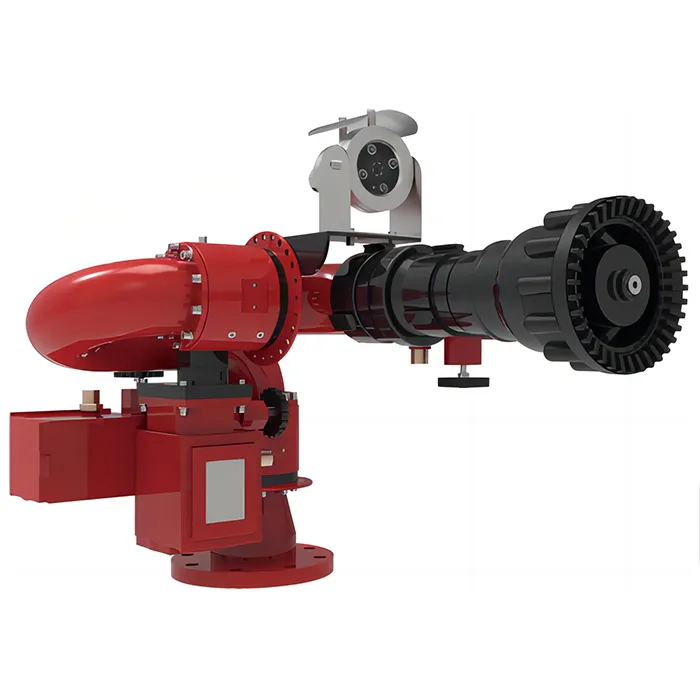
304L stainless steel construction;
Automatic monitor nozzle;
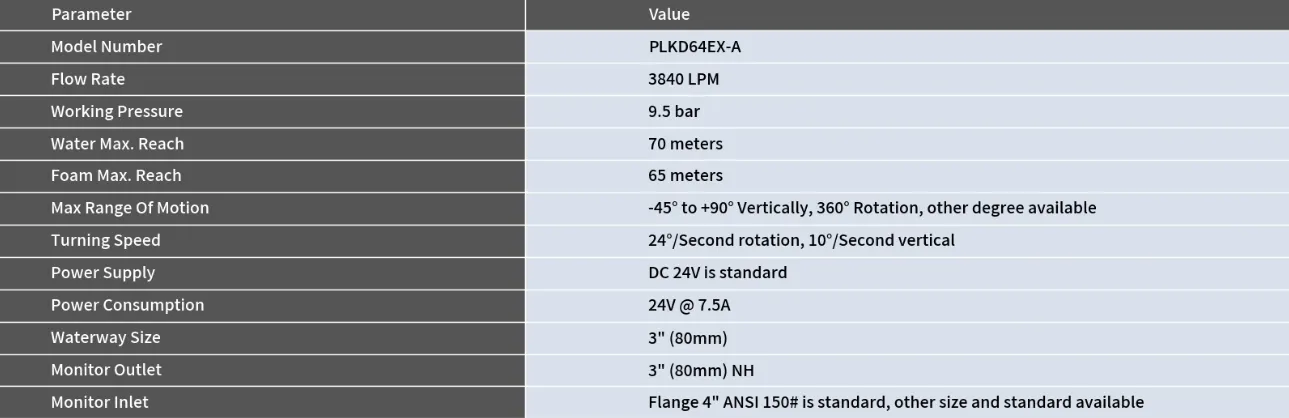
Vertical travel of 135°,from -45°to +90°;
350°rotation horizontally;
Electric control jetting Pattern: Straight stream,Fog;
Explosion proof class IICT4;
Optional power supply 12V/24V DC(optional), or 100-380 V AC;
Flow Rate 3000/3600/4800 LPM.
Product Parameters
Applications:
Stationary fire monitor systems are widely deployed across high-risk industries where rapid and effective fire suppression is critical. Their strong water discharge capacity and reliable performance make them suitable for various demanding environments:
Oil & Gas and Petrochemical Sites:
Installed around storage tanks, pipelines, and processing units to provide continuous protection in areas with high fire hazards and potential for rapid fire spread.
Warehouses and Logistics Centers:
Deployed in large storage areas to safeguard goods and infrastructure, especially where combustible materials are present.
Mining Operations:
Used in mining sites to address fire risks associated with machinery, fuel, and explosive gases, improving overall operational safety.
FAQ:
1. Where are they commonly installed in industrial settings?
- they are commonly installed in industrial settings such as chemical plants, oil refineries, and power plants to protect high-risk areas where flammable materials are stored or processed.
2. What is the purpose of fixed monitors in aircraft hangars?
- Fixed monitors are installed in aircraft hangars to ensure rapid fire suppression capabilities, protecting valuable aircraft and equipment in airports and military bases.
3. Why are they important in mining operations?
- In mining, where the potential for dust and gas explosions exists, fixed monitors provide a vital layer of fire protection for equipment and personnel.
Hot Tags: fixed fire monitor, China, manufacturers, suppliers, factory, custom, price, for sale


