Powerful Solutions For Business Growth
Contents
1. Overview of Fire Cabinets
2. Fire Extinguishers
3. Fire Valves
4. Fire Hose
5. Installation and Maintenance
6. Conclusion
1. Overview of Fire Cabinets
Fire cabinets are special cabinets used to store various fire-fighting equipment and instruments. They are generally made of metal and are durable, fireproof and moisture-proof. The cabinet structure is reasonably designed to effectively protect the fire-fighting equipment stored inside and prevent it from being damaged or ineffective due to the influence of the external environment.
Fire cabinets mainly store fire extinguishers, fire axes, fire wrenches, fire helmets, fire gloves, fire boots and other fire-fighting equipment and personal protective equipment to ensure that when a fire occurs, relevant personnel can quickly obtain the required fire-fighting tools for fire-fighting and rescue operations.
2. Fire Extinguishers
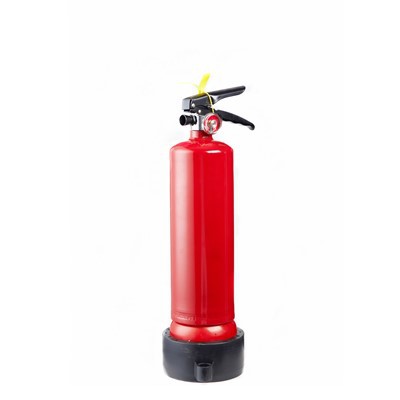
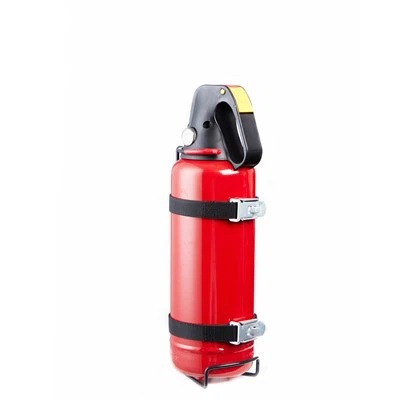
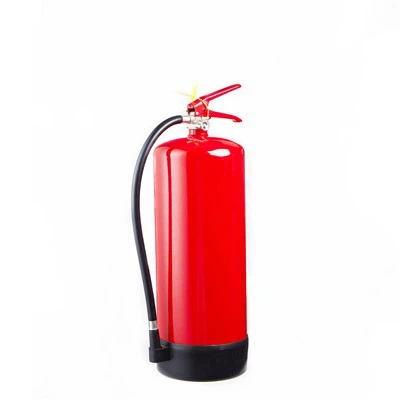
1) Dry Powder Fire Extinguishers
Dry powder fire extinguishers mainly include ABC dry powder fire extinguishers and BC dry powder fire extinguishers. ABC dry powder fire extinguishers can extinguish Class A (solid material) fires, such as wood, paper, cotton and linen; Class B (liquid or fusible solid material) fires, such as fires caused by gasoline, kerosene, crude oil, methanol, ethanol, asphalt, paraffin, etc.; Class C (gas) fires, including coal gas, natural gas, methane, ethane, propane, hydrogen, etc. BC dry powder fire extinguishers are mainly used to extinguish Class B and Class C fires.

Scope of application: Dry powder fire extinguishers have a wide range of applications and are widely used in various places. In a home environment, it can be used to extinguish grease fires in the kitchen, fires caused by electrical short circuits, etc.; in office places, it can effectively deal with fires caused by paper, office equipment, etc.; equipped in vehicles, it can also deal with vehicle fires, such as engine fires, fires of flammable items in the car, etc.
2) Carbon dioxide fire extinguisher
Features: This type of fire extinguisher is mainly divided into two types: portable and cart-type. Portable carbon dioxide fire extinguishers are easy to carry and suitable for fire fighting in a smaller area; cart-type carbon dioxide fire extinguishers can store more fire extinguishing agents and can be used for the initial control of fires in larger areas.

Scope of application: It is mainly used to extinguish the initial fires of valuable equipment, archives, instruments and meters, electrical equipment below 600 volts and oils.
3) Clean gas fire extinguisher
Features: Clean gas fire extinguishers mainly include heptafluoropropane fire extinguishers, IG541 fire extinguishers, etc. Heptafluoropropane is a colorless, odorless, non-conductive gas fire extinguishing agent, and IG541 is a mixed gas fire extinguishing agent composed of nitrogen, argon and carbon dioxide. These fire extinguishing agents are all green and environmentally friendly fire extinguishing agents.

Scope of application: Clean gas fire extinguishers are mainly used to protect some places with high environmental requirements that cannot be contaminated by fire extinguishing agents, such as electronic computer rooms, communication rooms, data storage centers and other precision instrument and equipment places. These fire extinguishing agents will not leave residues after extinguishing the fire, and will hardly cause damage to the equipment and environment, so they are widely used in occasions with extremely high requirements for equipment safety and data integrity.
3. Fire valves
Fire valves are an indispensable key component in the fire extinguishing system. They play a vital role in many aspects in ensuring the normal operation of the fire extinguishing system and achieving efficient fire extinguishing.
Types of fire valves
1)Water valve: Water valve is a valve used to control the flow and pressure of water in the fire protection system. Common types include gate valves, butterfly valves, check valves, etc.
2)Gate valve: The valve plate of the gate valve is disc-shaped, and the valve is opened and closed by moving perpendicular to the direction of the water flow.

3)Butterfly valve: The valve disc of the butterfly valve is disc-shaped, which rotates around a fixed axis to control the opening and closing of the valve. It has a simple structure, small size, light weight, easy operation, and can be opened and closed quickly.
4)Check valve: The check valve is also called a one-way valve, and its function is to prevent water from flowing back. When the water flows forward, the valve automatically opens to allow water to pass smoothly; when the water flows backward, the valve automatically closes to prevent the water from flowing in the opposite direction.
5)Foam liquid control valve: The foam liquid control valve is used to control the flow direction and flow of the foam liquid. When the foam fire extinguishing system is started, it can accurately deliver the appropriate amount of foam liquid to the proportioning mixer to mix with water according to actual needs.
4. Fire hose
As a key component for delivering fire extinguishing water in the fire fighting system, the fire hose plays an indispensable role in fire fighting. There are mainly the following types:

1) Manual water hose
Manual fire fighting is generally made of materials such as rubber or polyurethane, which has a certain degree of flexibility and is convenient for firefighters to operate at the fire scene. It is mainly used to extinguish fires inside buildings, small fire scenes, and areas accessible to personnel.
2) Automatic water recycling pipe
Automatic water recycling pipes are usually used in some large fire-fighting facilities or specific fire-fighting scenes. This water pipe system is equipped with a special water recycling device. During the fire-fighting process, the used fire-fighting water can be collected, filtered and purified, and then transported back to the fire-fighting water supply system for recycling. The main purpose is to reduce the waste of water resources and improve the utilization efficiency of fire-fighting water.
3) Retractable water pipe
Retractable fire-fighting water pipes are generally made of high-strength composite materials to ensure the pressure resistance of the water pipes. In some fire scenes with complex spaces and difficult to lay fixed-length water pipes, retractable water pipes can play a great advantage.
5. Installation and maintenance
Installation process
1) Positioning and marking: Position according to the size of the fire-fighting cabinet, use a level to ensure the level, and mark the installation holes.
2) Drilling and fixing: Drill according to the specifications of the expansion bolts, insert the bolts, fix the fire-fighting cabinet and tighten them to ensure firmness.
3) Sealing treatment: Apply sealant at the connection between the cabinet and the wall, and check and replace the cabinet door sealing strip.
Fire equipment placement: Place qualified equipment in an orderly manner, put fire extinguishers in easy-to-access places, coil water hoses, and put water guns in the card slots.
Maintenance of fire cabinets
1) Daily appearance inspection: Check the surface of the fire cabinet every day, clean dust and stains, check the cabinet door closure and door lock, and ensure clear markings.
2) Regular equipment inspection: Check the pressure, appearance and nozzle of the fire extinguisher every week, check whether the water hose is damaged, whether the interface is loose, whether the water gun is intact, and repair and replace the problematic equipment in time.
Cleaning and maintenance: Clean the fire cabinet thoroughly every month, apply lubricating oil to the metal parts, and check and maintain the sealing performance.
3) Regular maintenance records: After each maintenance, record the time, content, problems and handling status in order to formulate maintenance plans and replacement cycles.
6. Conclusion
The fire cabinet and the fire extinguishers, fire valves, fire hoses and other equipment it carries constitute a strict and efficient fire protection system. Only by ensuring that each equipment is in the best condition can we respond quickly when a fire occurs, effectively put out the fire, and minimize the loss of life and property.