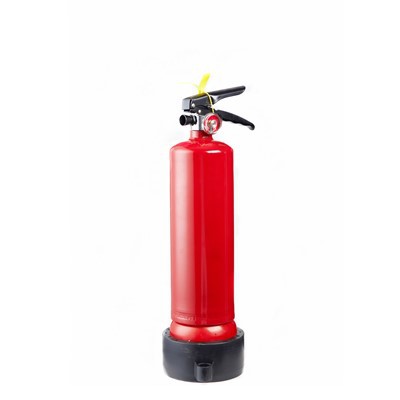
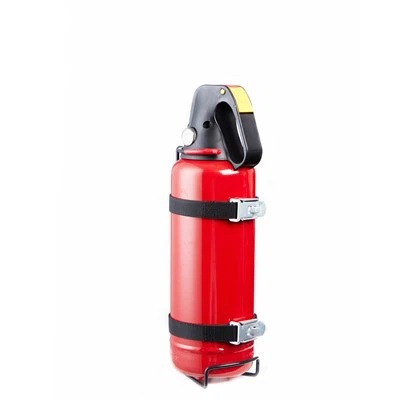
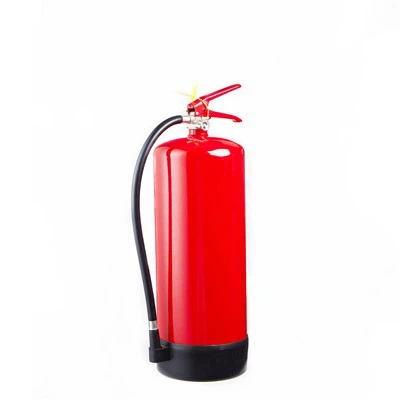
Wheeled fire extinguishers are large, mobile fire-fighting devices widely used in factories, warehouses, shopping malls, airports, and other locations. Due to their large capacity and high fire extinguishing efficiency, they are an important tool for extinguishing incipient fires. Compared to portable fire extinguishers, wheeled fire extinguishers have greater fire extinguishing capabilities and a wider coverage area, but their operation is relatively more complex and requires proper methods and standardized procedures.
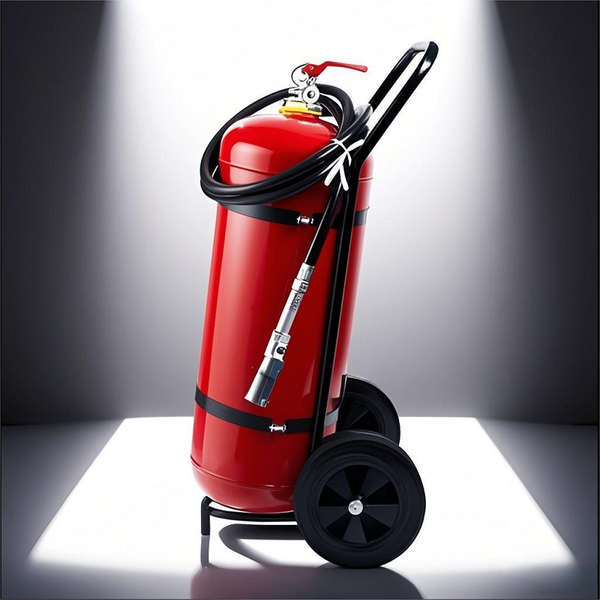
Structure and Types of Wheeled Fire Extinguishers
Structural Components
Wheeled fire extinguishers typically consist of the following main components:
• Extinguishing Agent Storage Tank: A container for storing the extinguishing agent (such as dry powder, carbon dioxide, or foam), with a capacity usually between 20 kg and 100 kg.
• Trolley Frame: A metal frame with wheels for easy movement and positioning.
• Spraying Device: Includes a nozzle or spray gun to control the direction and flow rate of the extinguishing agent.
• Pressure System: Usually a high-pressure nitrogen cylinder, providing the pressure required to propel the extinguishing agent.
• Operating Valve: Controls the release of the extinguishing agent, usually equipped with a handle or trigger.
• Hose: Connects the storage tank and the spraying device for convenient and flexible operation.
Common Types
Based on the type of extinguishing agent, wheeled fire extinguishers can be divided into the following types:
• Dry powder fire extinguisher: Suitable for extinguishing Class A (solid), Class B (liquid), and Class C (gas) fires; some models can also be used for Class E (electrical) fires.
• Carbon dioxide fire extinguisher: Primarily used for Class B and Class E fires, suitable for extinguishing fires involving precision instruments or electrical equipment.
• Foam fire extinguisher: Suitable for Class A and Class B fires, commonly used for oil fires.
• Water-based fire extinguisher: Suitable for Class A fires, and some models can also extinguish Class B fires.
Different types of wheeled fire extinguishers are suitable for different types of fires. Users should choose the appropriate model based on the fire risk of the location.
How to Use a Wheeled Fire Extinguisher
Assessing the Fire Situation
Before operating a wheeled fire extinguisher, quickly assess the fire situation:
• Identify the fire type: Determine whether the fire is Class A, B, C, D (metal), or E, and select the appropriate extinguisher.
• Assess the fire size: Wheeled fire extinguishers are suitable for extinguishing incipient fires. If the fire is too large or spreading rapidly, evacuate immediately and call the fire department.
• Ensure safety: Confirm you are upwind to avoid inhaling smoke; check that escape routes are clear.
Moving the Fire Extinguisher to a Suitable Position
• Push the extinguisher: Push the wheeled fire extinguisher to a safe position 5-10 meters away from the fire source, ensuring sufficient distance between the operator and the fire.
• Secure the position: Place the extinguisher on a flat surface and lock the wheels (if there is a braking device) to prevent sliding.
• Maintain stability: Ensure the extinguisher is upright to prevent tipping and leakage of the extinguishing agent.
Preparing for Discharge
• Check the pressure: Observe whether the pressure gauge needle is in the green zone to ensure the extinguisher pressure is normal.
• Unroll the hose: Fully unroll the discharge hose, avoiding kinks or folds that could affect the spray.
• Grip the nozzle: Hold the nozzle/spray gun with one or both hands, ready to operate.

Operating the Extinguisher
• Open the valve: Pull or press the operating valve handle to release the extinguishing agent. For dry powder extinguishers, the safety pin usually needs to be pulled out first.
• Aim at the fire source: Point the nozzle at the base of the fire (the bottom of the flames or the surface of the burning material), not the top of the flames.
• Control the spray: Use a "sweeping" motion, starting from one side of the fire source and moving the nozzle from side to side to cover the entire burning area. For liquid fires, proceed gradually from near to far.
• Maintain distance: Depending on the type of extinguishing agent and the size of the fire, maintain a spraying distance of 3-5 meters to avoid being harmed by flames or high temperatures.
Observation and Follow-up
• Confirm the fire is extinguished: After spraying, observe whether the fire is completely extinguished. If there are signs of re-ignition, continue spraying.
• Close the valve: Immediately close the operating valve after the fire is extinguished to prevent wasting the extinguishing agent.
• Evacuate the scene: After confirming safety, quickly evacuate the area, remaining vigilant to prevent the fire from reigniting.
• Report and clean up: Notify the fire department or relevant personnel, and clean up any remaining extinguishing agent (such as dry powder, which may cause dust pollution).
Precautions for Using Wheeled Fire Extinguishers
Safety Precautions
• Avoid working alone: If possible, it is recommended that two people work together, one responsible for spraying and the other assisting with moving the extinguisher or observing the fire.
• Wear protective equipment: If conditions permit, wear protective equipment such as fire-resistant gloves and safety glasses to prevent burns or inhalation of harmful gases.
• Pay attention to wind direction: Always stand upwind to avoid being affected by smoke or extinguishing agent blown back by the wind.
• Avoid electrical hazards: For Class E fires, prioritize using carbon dioxide or dry powder fire extinguishers, and ensure the power supply is disconnected.
Operating Precautions
• Familiarize yourself with the equipment: Before use, understand the type of fire extinguisher and its operating method, and read the instruction label on the equipment.
• Control the spray amount: Avoid releasing too much extinguishing agent at once; control the spraying time appropriately to cover the fire source.
• Prevent clogging: For dry powder fire extinguishers, gently shake the tank before use to prevent the dry powder from clumping and affecting the spray.
Environment and Applicability
• Choose the correct fire extinguisher: Different types of fires require different extinguishing agents. For example, water-based fire extinguishers should not be used for electrical or oil fires.
• Pay attention to ambient temperature: Carbon dioxide fire extinguishers may not be effective in low-temperature environments; check this beforehand.
• Avoid secondary injury: Dry powder fire extinguishers may produce dust after use, affecting visibility or breathing; ventilate the area as soon as possible.

Maintenance and Upkeep of Wheeled Fire Extinguishers
Daily Inspection
• Pressure Check: Check the pressure gauge pointer monthly to ensure it is in the green zone. If the pointer is too low or too high, contact a professional for inspection and repair.
• Visual Inspection: Check the storage tank, hose, and nozzle for corrosion, cracks, or blockages.
• Wheel Maintenance: Ensure the wheels of the trolley are flexible and free from jamming or damage.
Regular Maintenance
• Fire Extinguishing Agent Replacement: Replace the fire extinguishing agent regularly according to the type of extinguisher (dry powder approximately every 2-3 years, carbon dioxide approximately every 5 years).
• Pressure Testing: Conduct a pressure test annually to ensure there are no leaks in the storage tank and pressure system.
• Professional Inspection: Commission a fire equipment company to conduct an annual inspection to check the internal seals and valve functions.
Storage Requirements
• Storage Environment: Store the fire extinguisher in a dry, well-ventilated place, away from direct sunlight, to prevent corrosion of the storage tank or deterioration of the fire extinguishing agent.
• Moisture and Frost Protection: In humid or cold areas, take moisture-proof or insulation measures to prevent hose aging or freezing of the fire extinguishing agent.
• Easily Accessible Location: Place the extinguisher in a fire escape route or an easily accessible location to ensure quick use in case of emergency.
Applications of Wheeled Fire Extinguishers in Real-World Scenarios
Industrial Settings
In factories or warehouses, wheeled fire extinguishers are commonly used to extinguish fires caused by chemicals, oils, or equipment. For example, dry powder fire extinguishers can quickly cover large fire sources and are suitable for extinguishing fires in oil tanks or mechanical equipment.
Commercial Settings
Shopping malls, hotels, and other places with high foot traffic have a higher risk of fire. Due to their portability and efficiency, wheeled fire extinguishers are suitable for quickly responding to kitchen or electrical fires.
Public Facilities
In public places such as airports and train stations, wheeled fire extinguishers can be quickly moved to the source of the fire, making them suitable for extinguishing sudden fires and ensuring personnel safety.
Users should be familiar with the equipment's operation, receive regular training, and remain calm in emergencies to correctly use wheeled fire extinguishers and minimize fire damage.