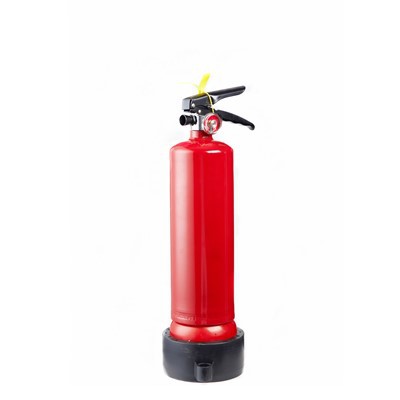
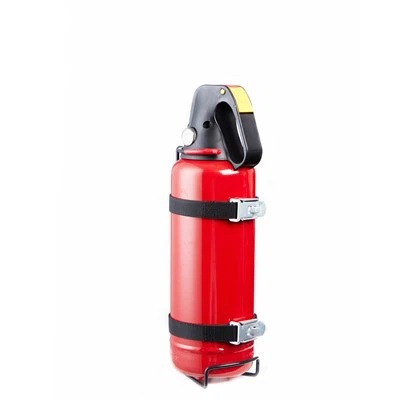
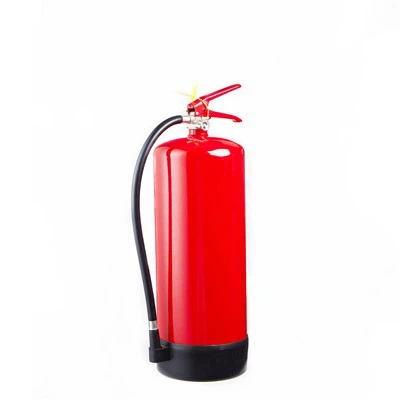
The prototype of modern fire extinguishers can be traced back to 1723 when British inventor Richard Newsham designed the first metal tank fire extinguisher filled with water and compressed air. In the late 19th century, chemical fire extinguishers began to gain popularity-In 1881, French chemist Paul Védier invented the prototype of dry chemical fire extinguishers with sodium bicarbonate as the main component, while in 1904, German engineer Johannes Draeger developed the first carbon dioxide fire extinguisher. By the mid-20th century, with the emergence of fluorocarbon foams (such as AFFF) and eco-friendly fire extinguishing agents, the safety and applicability of fire extinguishers were significantly enhanced. Today, new products like nano-particle fire extinguishing agents and aerosol fire extinguishers are gradually being applied in special scenarios, such as spacecraft or cultural heritage protection sites.

Regional Different Classification Standards
US NFPA Standard: Classifies fires into A/B/C/D/E/F (Class E for energized electrical fires, Class F for cooking oil fires). The corresponding fire extinguisher types are similar to those mentioned earlier, but it emphasizes the versatility of ABC dry chemical extinguishers.
European EN 3 Standard: Adopts Class A/B/C/D/K classification, where Class K specifically refers to kitchen grease fires, corresponding to Class F in the US. Europe promotes eco-friendly fire extinguishing agents, such as plant-based foams.
Chinese GB Standard: Drawing on international classifications, it divides fire extinguishers into Class A/B/C/D/E, emphasizing the 3C certification and mandatory retirement age for water-based extinguishers (hand-held water-based extinguishers have a retirement age of 6 years).
Fire extinguisher types and uses
Fire extinguishers are essential safety devices designed to combat different types of fires by removing one or more elements of the fire triangle (heat, fuel, oxygen). Understanding their classifications and applications is crucial for effective fire safety. Below are the five main types of fire extinguishers, along with their functions, usage scenarios, and technical details.
Water Fire Extinguishers
Type: Class A
Composition: Constructed with a carbon steel cylinder (wall thickness ≥1.2mm), filled with deionized water (conductivity <10μS/cm) and pressurized with 0.8–1.2MPa nitrogen. Low-temperature models may contain 30% propylene glycol antifreeze for use in -15°C environments.
Purpose: Leveraging water's high heat capacity (4.2kJ/kg·°C) and latent heat of vaporization (2,260kJ/kg), it cools solids like wood (ignition temp. ~250°C) below their ignition point. For example, 1L of water can absorb 2.26MJ, sufficient to cool 1kg of wood from 250°C to 25°C.
Usage Scenarios: Ideal for residential fires (e.g., a 2023 case where a 2L water extinguisher extinguished a bedding fire in 60 seconds) and organic material storage areas.
Technical Specs: Spray distance ≥4m, discharge time ≥15s, pressure decay ≤5%/year at 20°C.
Cautions:
Avoid Class B fires (water spreads gasoline, increasing fire area).
For Class C fires, ensure voltage <36V; water's conductivity (50–100μS/cm) poses electrocution risks.
Never use on Class D metals (e.g., water reacts with magnesium to release flammable hydrogen).
Foam Fire Extinguishers
Type: Class A/B
Composition: Steel cylinder containing a 6% aqueous film-forming foam (AFFF) solution, pressurized by nitrogen (1.0–1.3MPa). AFFF reduces surface tension to <22mN/m, enabling rapid fuel coverage.
Purpose:
Class A: Foam (density 0.1–0.2g/cm³) cools fuels and forms a moisture-retaining layer to prevent re-ignition.
Class B: Creates a 4mm-thick foam blanket on liquids (e.g., gasoline), blocking oxygen and suppressing vaporization.
Usage Scenarios: Gas stations (e.g., 5m² gasoline fire controlled in 5 minutes) and kitchens with flammable liquids.
Technical Specs: Foam expansion ratio ≥6x, 25% drain time ≥12 minutes, spray distance ≥3.5m.
Cautions:
Not for polar solvents (e.g., alcohol); use alcohol-resistant foam instead.
Maintain ≥1.5m distance from deep fryer fires to avoid hot oil splatter (foam impact can raise oil temperature by 30–50°C).
Dry Chemical Fire Extinguishers
Type: ABC/BC
Composition: Seamless steel cylinder filled with 150–250μm ammonium phosphate (ABC) or sodium bicarbonate (BC) powder, propelled by 1.2–1.4MPa nitrogen.
Purpose:
Class A: Powder decomposes endothermically (170kJ/g), forming a glassy layer to interrupt combustion reactions.
Class B: Creates a hydrocarbon-repellent barrier on liquids.
Class C: Non-conductive (volume resistivity >10¹²Ω·cm) for safe electrical fire suppression.
Usage Scenarios: Data centers (e.g., 2019 incident where an ABC extinguisher 扑灭 a short-circuit fire in an electrical cabinet within 15s) and commercial kitchens.
Technical Specs: Discharge lag time ≤5s, residual powder ≤10%, fire rating 3A/89B.
Cautions:
Residue corrodes electronics (pH of ammonium phosphate: 4.5–6.0).
For Class D fires, use sodium chloride-based powders (e.g., Pyroclene) instead.
Carbon Dioxide (CO₂) Fire Extinguishers
Type: Class B/C
Composition: High-strength alloy steel cylinder containing liquid CO₂ (purity ≥99.5%) at 15MPa (20°C), which vaporizes to -78.5°C dry ice upon release.
Purpose:
Class B: CO₂ (density 1.98kg/m³ vs. air 1.29kg/m³) displaces oxygen to create a (30–50% concentration) environment.
Class C: Non-conductive, safe for servers (e.g., 2022 case where CO₂ extinguished a server rack fire in 10s without equipment damage).
Technical Specs: Discharge time ≥8s, fire rating 55B, freezing risk at discharge nozzle (-78°C).
Cautions:
Ineffective for Class A (smoldering solids may reignite).
In enclosed spaces, CO₂ can reduce oxygen to <19.5%, requiring evacuation within 30 seconds and 10-minute ventilation post-use.
Wet Chemical Fire Extinguishers
Type: Class K (and limited Class A)
Composition: Aluminum cylinder with 5–8% potassium acetate solution (pH 8–10), pressurized by 0.8–1.0MPa nitrogen.
Purpose: Specifically designed for Class K fires (cooking oils, Tg ≥280°C). The agent reacts via saponification to form a 2mm-thick soapy layer, reducing thermal conductivity to <0.1W/m·K.
Usage Scenarios: Restaurants (e.g., 2021 incident where a wet chemical extinguisher controlled a 2m² deep fryer fire in 30s).
Technical Specs: 25% cooling time ≤5 minutes, anti-reflash time ≥10 minutes, spray distance ≥2m.
Cautions:
Conductive solution (10mS/cm) poses electrical hazard; keep ≥1m from live equipment.
Nozzle blockage risk from oil residue; require quarterly cleaning of 0.5mm mesh filters.
| Type | Fire Classes | Key Components | Primary Uses | Precautions |
| Water | Class A | Water,pressurized gas | Wood,paper,textiles | Do not use on liquid,electrical,or metal fires. |
| Foam | Class AB | Water+foam concentrate | Solids and flammable liquids | Avoid on electrical,metal,or deep fryer grease fires. |
| Dry Chemical | ABC or BC | Ammonium phosphate or sodium bicarbonate | Solids,liquids,and electrical fires | Residue may damage electronics;not for metals or cooking oils. |
| Carbon Dioxide | Class B,C | Compressed CO₂ | Flammable liquids and electrical equipment | Ineffective for solids;risk of asphyxiation in enclosed spaces. |
| Wet Chemical | Class K(and A) | Potassium-based solution | Cooking oils and fats | Only for kitchen fires;unsuitable for other fire classes. |
How to Use Fire Extinguishers
The PASS acronym is a standardized framework for operating fire extinguishers effectively. It stands for: Pull the safety pin to release the locking mechanism, Aim the nozzle or hose at the base of the fire (not the flames), Squeeze the handle to discharge the extinguishing agent, and Sweep from side to side across the fire's base until it is completely extinguished. This four-step method ensures controlled application, targets the fire's fuel source, and minimizes the risk of re-ignition, making it a universal guideline for safe and efficient fire suppression.
For Class A fires (solids like wood), use water or foam extinguishers to cool the fuel. For Class B fires (flammable liquids), apply foam or dry chemical agents at a 45° angle to smother the surface. Electrical fires (Class C) require CO₂ or dry chemical extinguishers to avoid conductivity, while kitchen grease fires (Class K) need wet chemical agents to form a heat-insulating layer through saponification. Always ensure an escape route, stand upwind, and never use an extinguisher if the fire is too large or spreading rapidly. After use, check for re-ignition and report the incident even if the fire is extinguished. Regular training and monthly pressure checks on extinguishers are crucial for effectiveness.
In summary, the efficacy of fire extinguishers hinges on their precise alignment with fire classes (A-K), each tailored to specific combustion materials. Water-based units, ideal for Class A fires, leverage thermal cooling but pose risks for liquid, electrical, or metal blazes. Foam variants extend this utility to Class B fires by oxygen deprivation, yet fail in conductive or metallic scenarios. Dry chemical extinguishers, while versatile for A/B/C classes, compromise electronics with corrosive residues, necessitating careful environment-specific deployment. CO₂ models safely address Class B/C hazards via oxygen displacement but risk asphyxiation in enclosed spaces and cannot prevent re-ignition of smoldering solids. Wet chemical agents, specialized for Class K kitchen fires, rely on saponification to create heat barriers but are unsuitable elsewhere. Crucial operational protocols-including the PASS technique, upwind positioning, and escape route verification-must be paired with routine maintenance (pressure checks, nozzle cleaning) and training. Historical data shows that 47% of ineffective fire suppressions stem from improper extinguisher selection or maintenance neglect, underscoring the need for systematic safety frameworks. Ultimately, fire safety demands a triad of informed classification, tactical deployment, and proactive upkeep to mitigate risks and protect infrastructure.