At present, with the increase in household appliances, the use of fire, electricity, and gas in daily life has become more frequent, and the incidence of household fires has also risen sharply. According to the fire department's knowledge, the situation of domestic fires in our country is very severe. It occurs every day on average and is gradually increasing. Almost all home fires are caused by not being put out in time, which has a lot to do with the extremely low penetration rate of home fire extinguishers. Fire prevention at home is not only to pay attention to fire safety but also to prepare for fire fighting. Because as far as a specific household fire is concerned, any big fire is a small fire at the beginning. It takes 3-5 minutes from the initial fire to the formation of a big fire. When the fire is ignited, it can be extinguished in time. Even if the fire is already large when it is discovered, the fire extinguisher can delay the rapid development of the fire and win precious time for firefighters to put out the fire.
1. Common fire hazards in households
In life, people use fire can be divided into "open flame" and "electric fire". "Open flames" can be understood as fire sources and fire hazards visible to our eyes, such as coal stoves, wood stoves, liquefied gas stoves, gas stoves, natural gas stoves, biogas stoves, kerosene stoves, candles, cigarettes, and fireworks for smokers Firecrackers, etc.; "electric fire" is understood as household appliances and lighting appliances that are invisible to our eyes and may cause fire hazards.
1. Pay attention to the fire prevention of various household stoves. Pay attention to the placement of stoves and accessories (chimneys, liquefied gas cylinders, connecting hoses), and the safe distance of surrounding combustibles. Pay attention to the repair and maintenance of liquefied gas or gas stoves, and damage and leakage of gas supply pipes to avoid fires.
2. Be careful to throw cigarette butts to cause a fire. "A cigarette can ruin a 10,000-foot-long building". Don't throw cigarette butts, especially in places with a lot of flammable substances like the kitchen. Pay special attention to the high electricity load in autumn and winter. When there is a temporary power failure, you must use candles to illuminate it. People are present; the correct method of setting off fireworks and firecrackers must be mastered. After the setting off, the scene must be inspected and cleaned to eliminate fire hazards.
3. Pay attention to burning garbage to cause a fire. There may be combustible and explosive materials in the garbage, such as liquefied gas residues, glass bottles, firecrackers, waste liquid lighters, etc., once burned, there is a possibility of explosion; avoid carelessness in life, careless use of fire, children playing with fire, etc. Fire.
4. Pay attention to "electric fire" fires. There are many types of household appliances, but from the perspective of their working principles, they can be roughly divided into electric heating (such as electric stove, electric oven, water heater, rice cooker, etc.) and non-electric heating (such as radio, TV, video recorder, tape recorder, electric Refrigerators, washing machines, air conditioners, etc.) in two categories.
The frequency of fires in electric household appliances is relatively high, so you must pay attention to safety and reasonableness, and do not use it for a long time and overload, especially high-power heating appliances. Non-electric heating appliances and lighting appliances should also be used rationally, and avoid fires caused by damage to the wires due to aging of the lines and frequent movement of the appliances. Related to the direct fire caused by electrical appliances is the hidden fire hazard of electrical wiring. Pay attention to the reasonableness and safety of short-circuit, overload, excessive contact resistance, overhead lines, and indoor wiring.
2. The use and selection of household fire extinguishing equipment
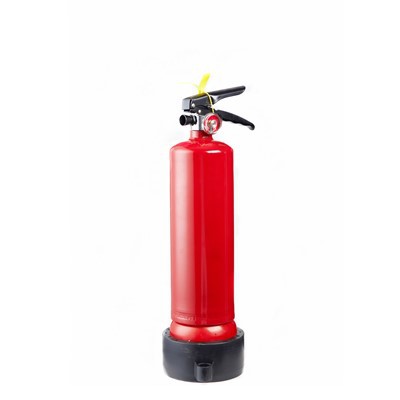
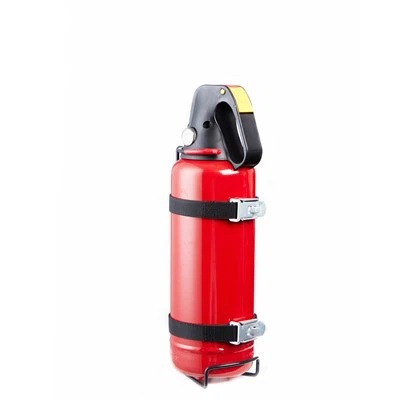
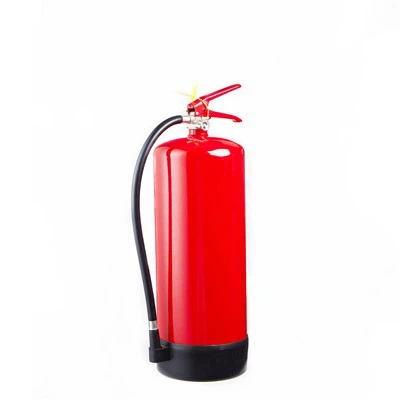
Common fire extinguishers for household use mainly include portable foam fire extinguishers, portable carbon dioxide fire extinguishers, and portable dry powder (ultra-fine dry powder) fire extinguishers.
1, portable foam fire extinguisher
is suitable for extinguishing the first fire of oil and general substances. When in use, hold the lifting ring of the fire extinguisher with your hand and lift it to the fire steadily and quickly. Do not carry it horizontally. When extinguishing a fire, hold the lifting ring with one hand and the bottom of the barrel with the other hand. Turn the fire extinguisher upside down, point the nozzle at the fire source, and shake it vigorously a few times to extinguish the fire.
However, if the foam fire extinguisher is used carelessly, the cover and bottom will pop up and hurt the human body; if it is sprayed with water at the same time, it will affect the fire extinguishing effect; when extinguishing an electrical fire, it is easy to cause electric shocks, which poses a certain risk.
2, portable carbon dioxide fire extinguisher
is suitable for extinguishing the first fires of precision instruments, electronic equipment, and electrical appliances below 600 volts. There are two ways to use portable carbon dioxide fire extinguishers, namely hand-wheel type, and duckbill type. The handwheel type requires one hand to hold the handle of the nozzle and the other to tear off the lead seal. Turn the handwheel counterclockwise and turn on the switch, and carbon dioxide gas will be ejected; for the duckbill type, you need to hold the handle of the nozzle with one hand, and Pull out the safety pin with one hand and press down the duckbill on the handle to extinguish the fire.
Be careful when putting out the fire, the personnel should stand upwind; the hand holding the spray canister should be held at the colloidal nozzle to prevent frostbite; after indoor use, ventilation should be strengthened, otherwise, it will suffocate the personnel.
3, portable dry powder fire extinguisher
Dry powder fire extinguishers are suitable for extinguishing oil, combustible gas, electrical equipment, and other initial fires. When in use, first open the safety pin, hold the nozzle with one hand, aim at the fire source, and pull the ring with the other hand to extinguish the fire source, which is very convenient to use.
3. Conclusion
Due to the frequent occurrence of home fires, it is particularly important to equip the home with a fire extinguisher. By spending a few tens of dollars, you may be able to avoid losses of tens of thousands of yuan, and you can also get a piece of safety for yourself and your family. Therefore, the author recommends that every family should be equipped with a small fire extinguisher, etc., and every member should master how to use it. Prevention is better than disaster relief. As long as fire safety inspections are carried out at home on a regular basis to eliminate fire hazards in time, most fires can be completely avoided, which reduces the occurrence of human tragedies.