A damaged hose can develop leaks, lose pressure, or create conditions that increase the risk of fire and flashback-related incidents. These problems are particularly concerning in fabrication workshops, shipyards, construction sites, and industrial maintenance facilities where hoses are frequently moved around active work areas.
Protecting welding hoses requires more than selecting suitable materials. Proper routing, heat shielding, equipment handling, routine inspection, and appropriate storage must work together. Using a suitable Welding Reel can also help organize hose deployment and reduce unnecessary contact with workshop floors. Understanding how different hazards affect hose performance helps operators establish more reliable maintenance practices and reduce avoidable equipment failures.
Understanding the Main Causes of Welding Hose Damage
Before implementing protective measures, it is important to identify the conditions that cause welding hoses to deteriorate. Different hazards affect the outer cover, reinforcement layers, and internal tube in different ways. Heat exposure may gradually weaken rubber materials, while mechanical contact can cause cuts, crushing, and deformation. Chemical contamination can also accelerate deterioration when the hose material is incompatible with the surrounding substances.
|
Damage Source |
Potential Effect on Welding Hoses |
|---|---|
|
Radiant heat |
Accelerates material aging and weakens the hose structure |
|
Direct flame |
Burns through the outer cover and may damage internal layers |
|
Welding sparks |
Creates localized burns, surface pits, and material deterioration |
|
Molten metal spatter |
Causes localized melting and potentially severe damage |
|
Sharp edges |
Cuts or abrades the outer cover |
|
Heavy equipment |
Crushes, pinches, or deforms the hose |
|
Repeated bending |
Creates fatigue and stress around bends and connections |
|
Chemical contamination |
Deteriorates materials that are incompatible with the chemical exposure |
These risks are often interconnected. For example, a hose routed across a metal fabrication floor may experience heat exposure, contact with sharp workpieces, and repeated compression from moving equipment. Effective protection therefore requires a comprehensive approach rather than relying on a single protective accessory. Proper routing and the use of a suitable Welding Reel can also help keep hoses organized and away from common sources of mechanical damage.
Keep Welding Hoses Away from Direct Heat and Hot Surfaces
High temperatures are among the most significant threats to rubber welding hoses. Although these hoses are manufactured for industrial gas delivery, their temperature resistance has defined limits. Continuous exposure to excessive heat can accelerate rubber aging, reduce flexibility, and compromise the integrity of the hose assembly. The first protective measure is to establish a safe routing distance from welding torches, heated workpieces, furnaces, cutting equipment, and other heat sources.
Whenever practical, route hoses around the welding area rather than directly through it. Avoid placing them on recently welded metal, heated steel plates, or surfaces where hot materials may be temporarily stored. Operators should also consider radiant heat because a hose does not need to touch a hot object to experience thermal damage. Prolonged exposure to nearby hot surfaces can gradually affect its material properties.
Where equipment layouts make separation difficult, suitable protective barriers can help reduce exposure. Heat-resistant covers, noncombustible screens, and properly designed hose guards may provide additional protection against localized heat, provided that their materials are compatible with the operating temperature and working conditions. After welding operations, hoses should not be left in contact with hot metal or near cooling workpieces. Allowing the surrounding area to return to a safe temperature before repositioning equipment helps reduce unnecessary thermal exposure.
Prevent Sparks, Molten Metal, and Welding Spatter from Reaching Hoses
Welding sparks and molten metal particles can cause localized damage even when the surrounding air temperature is relatively low. During arc welding, cutting, and grinding, hot particles may travel beyond the immediate working position and land on nearby equipment. Repeated exposure can produce small burns, hardened spots, or holes in the hose cover, while more severe contact with molten metal can penetrate the outer layer and compromise the hose assembly.
Several practical measures can reduce this risk:
- Use welding screens: Install suitable noncombustible screens to separate active welding operations from nearby equipment and hose routes.
- Position hoses outside the spark path: Avoid routing hoses beneath welding tables, cutting stations, or locations where slag and hot particles may fall.
- Install appropriate protective sleeves: Where exposure cannot be completely avoided, compatible heat- and spark-resistant sleeves can provide an additional protective layer.
- Keep work areas organized: Remove unnecessary materials and avoid allowing hoses to accumulate near grinding or cutting operations.
- Reposition equipment when necessary: If welding positions change, reassess the hose route rather than assuming the original arrangement remains safe.
Protective sleeves should not be treated as permission to expose hoses directly to flames or molten metal. Their performance depends on material construction, temperature limits, installation, and exposure duration. The surrounding welding area should also be managed according to hot-work safety procedures, including removing combustible materials and using appropriate fire barriers to protect both equipment and personnel.
Prevent Abrasion, Crushing, and Mechanical Stress
Mechanical damage is another major cause of premature welding hose failure. Unlike thermal deterioration, which may develop gradually, mechanical damage can occur suddenly when hoses are caught under equipment, pulled across sharp surfaces, or compressed by heavy objects. In busy fabrication facilities, hoses frequently cross workstations, equipment access routes, and temporary material storage areas. Without proper routing and protection, routine movement can gradually wear down the hose cover.
Several handling practices can help prevent this damage:
- Avoid sharp edges and rough surfaces: Do not drag hoses across unfinished steel, metal corners, cutting edges, or abrasive workshop floors. Where crossing these surfaces is unavoidable, use suitable edge protection or dedicated hose guides.
- Protect hoses from vehicle traffic: Forklifts, welding carts, lifting equipment, and material-handling vehicles can crush or pinch hoses. Route them overhead or along designated protected pathways whenever possible. If floor-level routing is necessary, use appropriately rated hose bridges or protective channels.
- Maintain suitable bending radii: Avoid sharp turns, kinks, and twisting. Hose routing should allow natural movement without forcing the assembly into an excessively curved position. When a Welding Reel is used, its drum diameter and winding arrangement should accommodate the hose manufacturer's minimum bending requirements.
- Prevent pulling and tension at connections: Never use a welding hose to pull a torch, move equipment, or reposition gas cylinders. Excessive tension can weaken the connection between the hose and its fittings, potentially resulting in leakage.
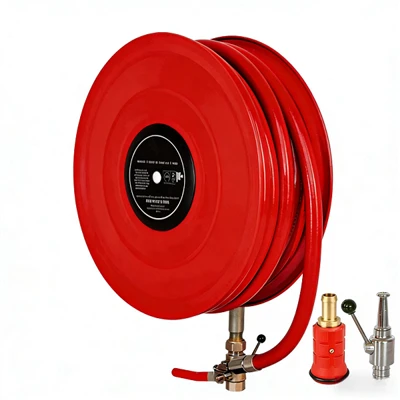
A properly positioned Welding Reel can also help manage hose deployment and retrieval, reducing unnecessary contact with workshop floors. However, it should be installed outside vehicle routes and away from welding sparks, hot surfaces, and other hazardous areas. These precautions are particularly important in production environments where welding equipment is frequently relocated between workstations.
Select Suitable Hose Materials and Protective Accessories
Effective hose protection begins with choosing an assembly appropriate for the intended gas, working pressure, operating temperature, and application environment. Rubber welding hoses are commonly used because of their flexibility and suitability for industrial gas delivery. However, not all rubber compounds offer the same resistance to heat, abrasion, oil, chemicals, or environmental exposure. Buyers and equipment managers should therefore evaluate the complete hose construction rather than focusing only on its outer material.
|
Selection Factor |
What to Consider |
|---|---|
|
Gas compatibility |
Ensure the hose is designed for the intended gas and application |
|
Working pressure |
Confirm that the rated pressure meets equipment requirements |
|
Temperature range |
Check the manufacturer's specified operating limits |
|
Outer cover |
Evaluate resistance to abrasion, weathering, and environmental exposure |
|
Reinforcement |
Consider structural strength and resistance to deformation |
|
Flexibility |
Ensure the hose can accommodate normal movement and routing |
|
Fittings |
Verify compatibility, secure attachment, and leak-tight connections |
Protective accessories can further improve service life when correctly selected and installed. These include abrasion sleeves, heat-resistant guards, hose hangers, protective channels, and edge guards. For applications requiring organized hose storage and controlled deployment, a compatible Welding Reel can also be considered as part of the overall equipment arrangement. Buyers should verify its compatibility with hose dimensions, gas service, operating conditions, and installation requirements.
Accessories should complement appropriate hose selection rather than compensate for an unsuitable assembly. An abrasion sleeve cannot correct an incorrect gas compatibility rating, and a heat shield cannot make a standard hose suitable for direct flame exposure. When choosing a Welding Reel, the winding arrangement and drum dimensions should also be considered to prevent unnecessary bending and mechanical stress.
Establish Regular Inspection and Preventive Maintenance Procedures
Even well-routed and properly protected welding hoses require regular inspection. Small defects can develop during normal operation, particularly in facilities with frequent equipment movement and demanding working conditions. A practical inspection procedure should cover the entire hose length, including areas that are less visible during normal operation, as well as the fittings and connections.
Operators should check for:
- Cuts, cracks, burns, and holes in the outer cover.
- Bulges, flattening, or unusual deformation.
- Hardening, excessive softening, or changes in flexibility.
- Abrasion around contact points and frequently moved sections.
- Loose fittings, damaged couplings, and connection deterioration.
- Signs of leakage or unusual gas flow behavior.
Hoses should be inspected before use, with additional checks scheduled according to operating conditions, equipment requirements, and applicable safety regulations. Particular attention should be given to sections exposed to repeated bending, high temperatures, vehicle traffic, or contact with metal surfaces. Equipment used for hose storage and handling should also be checked. A Welding Reel should be examined for damaged winding surfaces, unstable mounting, worn components, and conditions that could cause hose abrasion or excessive bending.
Defective hoses must be removed from service. Damaged sections should not be covered with tape or repaired using improvised splicing methods. Replacement should follow the hose manufacturer's instructions and applicable requirements. Leak testing should also form part of the maintenance program, using suitable approved testing methods rather than an open flame. Connections, regulators, and torch assemblies should be checked as part of the overall gas delivery system. Keeping inspection records helps maintenance teams identify recurring damage patterns and determine whether changes to equipment routing or workshop layout are necessary.
Store and Handle Welding Hoses Correctly Between Operations
Proper storage is often overlooked, especially in workshops where equipment is shared between different operators or production areas. However, unsuitable storage conditions can cause deterioration even when hoses are not actively being used. After completing welding work, hoses should be disconnected or isolated according to the equipment manufacturer's operating procedures. Gas supplies should be shut off, and the system should be depressurized using the appropriate safe procedure.
Before storage, inspect the hose for visible damage, contamination, and abnormal deformation. Remove surface dirt using cleaning methods compatible with the hose material. Solvents or aggressive cleaning chemicals should not be used unless specifically approved by the manufacturer. Hoses should be stored in a clean, dry, and adequately ventilated location, away from:
- Direct sunlight and excessive ultraviolet exposure.
- Furnaces, heaters, and other heat sources.
- Oil, grease, solvents, and incompatible chemicals.
- Sharp tools, metal scraps, and abrasive materials.
- Heavy objects that could compress or deform the hose.
When coiling hoses, maintain a suitable bend radius and avoid tight loops or twisting. Dedicated storage reels or hooks can help prevent tangling and reduce unnecessary mechanical stress. A properly selected Welding Reel can make hose handling more organized, provided that the hose is wound without twisting, kinking, or exceeding its permitted bending radius.
It is also important to keep oxygen and fuel gas hoses properly identified and separated according to applicable requirements. Their connections and fittings must remain compatible with the intended gas service. Good storage practices make equipment easier to inspect, reduce handling damage, and help maintain consistent operating conditions.
Reliable Firefighting Equipment from Xinhao Fire
Ningbo Xinhao Fire Fighting Equipment Co., Ltd. specializes in manufacturing and supplying fire extinguishers and firefighting equipment. With in-house design capabilities, production facilities, and quality testing equipment, the company supports distributors, importers, and industrial buyers with dependable firefighting product solutions.
For businesses seeking reliable fire safety equipment for industrial workshops, fabrication facilities, and other demanding environments, Xinhao Fire offers a range of products and OEM/ODM cooperation options.