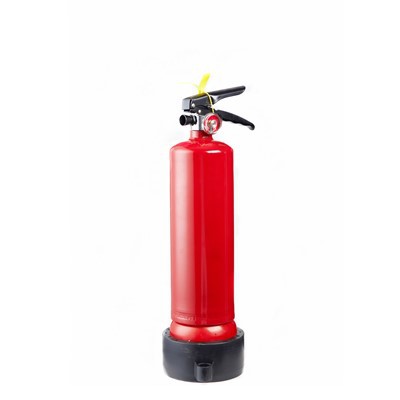
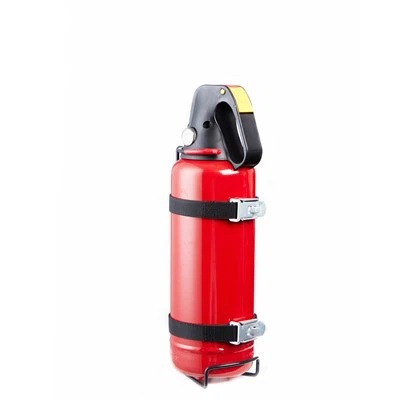
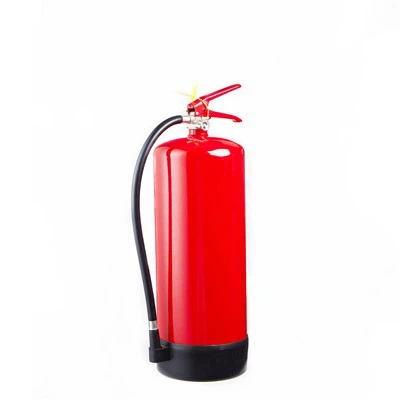
Fire extinguishers are a kind of fire-fighting essentials that are often neglected in normal times but can be very useful in times of emergency. Especially in today's world where high-rise buildings are everywhere and interiors are decorated with a lot of wood, plastic, and fabric, once there is a fire, without proper fire extinguishers, it may lead to a disaster. Whether a fire extinguisher has been used or not, it must be scrapped when it reaches the scrap age from the date of production. So how long is the service life of a fire extinguisher? What should I do after it expires?

Fire Classification
Class A fire: refers to fires of solid materials. This material usually has the properties of organic matter and generally produces hot embers when burning. Such as fires of wood, hay, coal, cotton, wool, hemp, paper, etc.
Class B fire: refers to fires of liquid or fusible solid materials. Such as fires of kerosene, diesel, crude oil, methanol, ethanol, asphalt, paraffin, plastic, etc.
Class C fire: refers to gas fires. Such as fires of coal gas, natural gas, methane, ethane, propane, hydrogen, etc.
Class D fire: refers to metal fires. Such as fires of potassium, sodium, magnesium, titanium, zirconium, lithium, aluminum-magnesium alloy, etc.
Class E fire: refers to electric fires. Fires in which objects burn with electricity.
Class F fire: refers to fires of cooking materials (such as animal and vegetable oils) in cooking utensils.
How to choose a fire extinguisher
When choosing a fire extinguisher, the following regulations should be met:
1. For Class A fires, water-type, foam, dry powder, halogenated hydrocarbons and other fire extinguishers should be selected.
2. For Class B fires, dry powder, foam, halogenated hydrocarbons, carbon dioxide and other fire extinguishers should be selected. Chemical foam fire extinguishers should not be used to extinguish water-soluble Class B fires.
3. For Class C fires, dry powder, halogenated hydrocarbons and carbon dioxide fire extinguishers should be selected.
4. For fires of live equipment, halogenated hydrocarbons, carbon dioxide and dry powder fire extinguishers should be selected.
5. For fires of Class A/B/C and live equipment, dry powder and halogenated hydrocarbon fire extinguishers should be selected.
6. For Class D fires, special dry powder fire extinguishers should be selected.

Types of fire extinguishers and objects of protection
1. Carbon dioxide, carbon tetrachloride, 1211, dibromodifluoromethane, 2402, 1301, heptafluoropropane, and hexafluoropropane should be used to extinguish cultural relics and archives.
2. Dry powder, carbon dioxide, carbon tetrachloride, 1211, dibromodifluoromethane, 1301, 2402, heptafluoropropane, hexafluoropropane, and anti-solvent foam should be used to extinguish flammable liquids.
3. Dry powder, carbon dioxide, carbon tetrachloride, 1211, dibromodifluoromethane, 1301, 2402, heptafluoropropane, and hexafluoropropane should be used to extinguish flammable gases.
4. Dry powder, carbon dioxide, carbon tetrachloride, 1211, dibromodifluoromethane, 1301, 2402, heptafluoropropane, and hexafluoropropane should be used to extinguish electrical equipment fires.
5. For fires in precision instruments, carbon dioxide, carbon tetrachloride, 1211, dibromodifluoromethane, 1301, 2402, heptafluoropropane, and hexafluoropropane should be used.
Toxicity of fire extinguishers
- 1211 (difluoromonochloromonobromomethane): slightly aromatic at room temperature, toxic, must be ventilated after use to prevent poisoning or asphyxiation.
- 1301 (trifluoromonobromomethane): slightly aromatic at room temperature, toxic, must be ventilated after use to prevent poisoning or asphyxiation.
- 2402 (tetrafluorodibromoethane): slightly aromatic at room temperature, toxic when exposed to high temperatures, must wear a gas mask when using.
- 1202 (difluorodibromomethane): slightly aromatic at room temperature, toxic, must be ventilated after use to prevent poisoning or asphyxiation.
- FM200 (HFC-227ea): colorless and odorless at room temperature, non-toxic, no ventilation is required after use.
- Carbon dioxide (CO2): non-toxic and odorless at room temperature, gas is asphyxiating, must be ventilated after use to prevent asphyxiation.
- Carbon tetrachloride (CCI4): slightly sweet at room temperature, toxic when exposed to open flames, must be ventilated after use to prevent asphyxiation.
- Dry powder (NaHCo3): non-toxic and odorless at room temperature, irritates the respiratory tract when extinguishing fire, must be ventilated after use.
- Dry powder (NH4H2PO4): non-toxic and odorless at room temperature, irritates the respiratory tract when extinguishing fire, must be ventilated after use.
- Dry powder (NH4H2PO4+NaHCo3): non-toxic and odorless at room temperature, irritates the respiratory tract when extinguishing fire, must be ventilated after use.
Fire extinguisher service life
1. Portable chemical foam fire extinguisher 5 years;
2. Portable acid-base fire extinguisher 5 years;
3. Portable water fire extinguisher 6 years;
4. Portable dry powder fire extinguisher (gas cylinder type) 8 years;
5. Portable pressure storage dry powder fire extinguisher 10 years;
6. Portable 1211 fire extinguisher 10 years;
7. Portable carbon dioxide fire extinguisher 12 years;
8. Cart-type chemical foam fire extinguisher 8 years;
9. Cart-type dry powder fire extinguisher (gas cylinder type) 10 years;
10. Cart-type pressure storage dry powder fire extinguisher 12 years;
11. Cart-type 1211 fire extinguisher 10 years;
12. Cart-type carbon dioxide fire extinguisher 12 years.
Scrap mark
Fire extinguishers or gas cylinders that should be scrapped must have holes punched on the barrel or bottle, and a "scrap" mark must be affixed with a sticker. The content is as follows:
1. The word "scrap", the minimum font size is 25mmx25mm;
2. Year and month of scrapping;
3. Name of the maintenance unit;
4. Signature of the inspector.
The shelf life does not mean that it can be used before. An annual inspection is required. Fire extinguishers must be refilled after being opened. If the pressure is green or yellow, it can be used. If it is red, there is no pressure and it cannot be used even if there is fire. Try to ensure an annual inspection and irregular inspection to ensure that it works in case of fire.
How to deal with fire extinguishers after their validity period expires
There are many types of fire extinguishers, and each type has different validity periods and maintenance methods. Fire extinguishers should be repaired by specialized units according to the requirements specified by the manufacturer.
Portable dry powder fire extinguishers should be subjected to water pressure tests on the head, cylinder and gas cylinder every five years or before refilling. The refilled gas cylinder should be tested for air tightness. They can only be used after passing the water pressure test and air tightness test;
The dry powder storage tank and carbon dioxide cylinder of a cart-type dry powder fire extinguisher need to be tested for water pressure every three years, and can only be used after passing the test;
Air mechanical foam fire extinguishers should be tested for water pressure strength every time the extinguishing agent is replaced or it has been out of the factory for more than three years, and can only be used after passing the test;
Cargo carbon dioxide fire extinguishers should be tested for water pressure every five years or before refilling, and can only be used after passing the test;
Water fire extinguishers should be tested for water pressure before each refilling, and can only be refilled and used after passing the test. Carbon dioxide cylinders should be weighed every six months, and if there is a leak, they should be refilled.
Fire extinguishers must be scrapped if they reach the following age from the date of manufacture:
Water-based fire extinguishers - 6 years;
Dry powder fire extinguishers - 10 years;
Clean gas fire extinguishers - 10 years;
Carbon dioxide fire extinguishers and gas cylinders - 12 years;
How to use a fire extinguisher
Dry powder fire extinguisher
Scope of application: Sodium bicarbonate dry powder fire extinguisher is suitable for the initial fire of flammable and combustible liquids, gases and live equipment; ammonium phosphate dry powder fire extinguisher can be used for the above-mentioned types of fires, and can also extinguish the initial fire of solid materials. But neither can extinguish metal burning fires.
When using a dry powder fire extinguisher to extinguish a flammable or combustible liquid fire, it should be aimed at the main part of the flame and swept. If the liquid fire being extinguished is flowing and burning, it should be aimed at the root of the flame from near to far, and swept left and right until the flame is completely extinguished. If the flammable liquid is burning in a container, the user should aim at the root of the flame and shake it left and right to cover the entire surface of the container opening; when the flame is driven out of the container, the user should continue to spray until the flame is completely extinguished.
When extinguishing a flammable liquid fire in a container, it should be noted that the nozzle cannot be directly aimed at the liquid surface to spray, to prevent the impact of the jet from splashing the flammable liquid and expanding the fire, making it difficult to extinguish the fire. If the flammable liquid burns for too long in a metal container, the wall temperature of the container is higher than the auto-ignition point of the flammable liquid, which can easily cause the fire to reignite after extinguishing. If used in conjunction with a foam fire extinguisher, the fire extinguishing effect will be better.
How to use: When extinguishing a fire, you can carry or shoulder a fire extinguisher and quickly run to the fire scene, and put down the fire extinguisher about 5 meters away from the burning place. If you are outdoors, you should choose to spray in the upwind direction. If the dry powder fire extinguisher used is an external pressure storage type, the operator should hold the spray gun tightly with one hand and lift the opening ring on the gas cylinder with the other hand. If the gas cylinder is opened by a handwheel, turn it counterclockwise and turn it to the highest position, then lift the fire extinguisher. When the dry powder is sprayed out, quickly aim at the root of the flame and spray it. If the dry powder fire extinguisher used is a built-in gas cylinder or a pressure storage type, the operator should first pull out the safety pin on the opening handle, then hold the nozzle at the front end of the spray hose, and press the opening handle with the other hand to open the fire extinguisher to extinguish the fire. When using a fire extinguisher with a spray hose or a pressure storage type fire extinguisher, one hand should always press the handle and not release it, otherwise the spraying will be interrupted.
Note: When using an ammonium phosphate dry powder fire extinguisher to extinguish a solid combustible fire, spray it at the most intense burning point and sweep it up and down and left and right. If conditions permit, the user can carry the fire extinguisher and spray it around the burning object, so that the dry powder fire extinguishing agent is evenly sprayed on the surface of the burning object until the flames are completely extinguished. The use of a cart-type dry powder fire extinguisher is the same as that of a portable dry powder fire extinguisher.
Foam fire extinguisher
Scope of application: It is suitable for extinguishing general Class B fires, such as fires of oil products, grease, etc., and can also be used for Class A fires, but it cannot extinguish fires of water-soluble combustible and flammable liquids in Class B fires, such as fires of alcohols, esters, ethers, ketones and other substances; it cannot extinguish fires of live equipment and Class C and Class D fires.
Portable use method: You can carry the lifting ring on the upper part of the cylinder and quickly rush to the fire scene. At this time, you should be careful not to tilt the fire extinguisher too much, and you must not hold it horizontally or upside down, so as to avoid the two agents mixing and spraying out in advance. When it is about 10 meters away from the fire point, you can turn the cylinder upside down, hold the lifting ring with one hand, and hold the bottom ring of the cylinder with the other hand, and aim the jet at the burning object.
When extinguishing a flammable liquid fire, if it is already burning in a flowing state, spray the foam from far to near so that the foam completely covers the surface of the burning liquid; if it is burning in a container, the foam should be sprayed towards the inner wall of the container so that the foam flows along the inner wall and gradually covers the surface of the burning liquid. Avoid spraying directly at the liquid surface, so as to avoid the impact of the jet, which will scatter or flush the burning liquid out of the container and expand the burning range. When extinguishing a fire of solid materials, the jet should be aimed at the most violent burning area. When extinguishing a fire, as the effective spray distance shortens, the user should gradually approach the burning area and always spray the foam on the burning object until it is extinguished. When using, the fire extinguisher should always be kept in an inverted state, otherwise the spraying will be interrupted.
Storage Note: Portable foam fire extinguishers should be stored in a dry, cool, ventilated and convenient place. They should not be placed near high temperatures or places that may be exposed to the sun to prevent the decomposition of carbonic acid and become ineffective; antifreeze measures should be taken in winter to prevent freezing; and dust should be wiped off and the nozzle should be unclogged frequently to keep it unobstructed.
Trolley-type foam fire extinguisher
- Its fire application is the same as that of portable chemical foam fire extinguishers.
How to use the cart-type: When using, it is usually operated by two people. First, push and pull the fire extinguisher quickly to the fire scene, stop about 10 meters away from the fire point, and one person releases the spray hose, holds the spray gun tightly with both hands and aims at the burning place; the other person first turns the hand wheel counterclockwise to raise the screw to the highest position to fully open the bottle cap, then tilts the cylinder backwards to make the pull rod touch the ground, and rotates the valve handle 90 degrees to spray foam for fire extinguishing. If the valve is installed at the spray gun, the person responsible for operating the spray gun opens the valve.
- The fires and usage methods of the cart-type foam fire extinguisher are the same as those of the portable chemical foam fire extinguisher.
Carbon dioxide fire extinguisher
Scope of application: Carbon dioxide fire extinguishers are mainly used to extinguish the initial fire of valuable equipment, archives, instruments and meters, electrical equipment below 600 volts and oils. When using, you should first lift the fire extinguisher to the fire site, put down the fire extinguisher, pull out the safety pin, hold the handle at the root of the horn with one hand, and hold the pressure handle of the opening and closing valve with the other hand.
For carbon dioxide fire extinguishers without spray hoses, the horn should be turned up 70-90 degrees. When using, you cannot directly grasp the outer wall of the horn or the metal connecting pipe with your hands to prevent frostbite. When using a carbon dioxide fire extinguisher, if it is used outdoors, you should choose to spray in the upwind direction; if it is used in a narrow space indoors, the operator should leave quickly after extinguishing the fire to prevent suffocation.
How to use: When extinguishing a fire, just lift or carry the fire extinguisher to the fire scene, about 5 meters away from the burning object, pull out the fire extinguisher safety pin, hold the handle at the root of the horn with one hand, and hold the pressure handle of the opening and closing valve with the other hand. For CO2 fire extinguishers without spray hoses, the horn should be tilted upwards by 70-90 degrees. When using, do not directly grasp the outer wall of the horn or the metal connecting pipe with your hands to prevent frostbite. When extinguishing a fire, when the flammable liquid is burning in a flowing state, the user sprays the jet of CO2 fire extinguishing agent from near to far toward the flame.
If the flammable liquid is burning in a container, the user should lift the horn. Spray from the upper part of one side of the container into the burning container. However, the CO2 jet cannot directly impact the flammable liquid surface to prevent the flammable liquid from being flushed out of the container and expanding the fire, making it difficult to extinguish the fire.
Precautions: When using a CO2 fire extinguisher, if used outdoors, you should choose to spray in the upwind direction, and put your hands on the wooden handle of the cylinder to prevent frostbite. If used in a narrow space indoors, the operator should leave quickly after extinguishing the fire to prevent suffocation.
Others: A cart-type carbon dioxide fire extinguisher is usually operated by two people. When in use, two people push or pull the fire extinguisher to the burning place together, stop about 10 meters away from the burning object, one person quickly removes the horn and unfolds the spray hose, holds the handle at the root of the horn, and the other person quickly rotates the handwheel in a counterclockwise direction and opens it to the maximum position. The fire extinguishing method is the same as that of the portable type.
Simple fire extinguisher
Handheld: When using, the handle of the portable fire extinguisher or the shoulder fire extinguisher should be brought to the fire scene. Put down the fire extinguisher about 5 meters away from the burning place, pull out the safety pin first, hold the opening handle with one hand, and hold the nozzle at the front end of the spray hose with the other hand. If the fire extinguisher does not have a spray hose, you can hold the opening pressure handle with one hand and hold the bottom ring part of the bottom of the fire extinguisher with the other hand. First aim the nozzle at the burning place, hold the opening pressure handle tightly, and let the fire extinguisher spray. When the flammable liquid to be extinguished is burning in a flowing state, the user should aim at the root of the flame from near to far and sweep left and right, and move forward quickly until the flame is completely extinguished.
If the flammable liquid is burning in a container, aim at the flame and shake it left and right. When the flame is driven out of the container, the jet stream follows the flame and sweeps until the flame is completely extinguished. However, it should be noted that the jet stream cannot be sprayed directly on the surface of the burning liquid to prevent the extinguishing agent from pushing the flammable liquid out of the container and expanding the fire, making it difficult to extinguish the fire. If you are fighting an initial fire of flammable solid materials, aim the jet at the most intense burning area. When the flame is extinguished, take timely measures to prevent it from rekindling.
The 1211 fire extinguisher cannot be turned upside down or lying horizontally when in use, otherwise the fire extinguishing agent will not spray out. In addition, when used outdoors, you should choose to spray in the upwind direction; when extinguishing a fire in a narrow room, the operator should evacuate quickly after extinguishing the fire, because the 1211 fire extinguishing agent is also toxic to a certain extent to prevent harm to the human body.
Cart type: When extinguishing a fire, it is generally operated by two people. First, push or pull the fire extinguisher to the fire scene, stop about 10 meters away from the burning place, one person quickly releases the spray hose, holds the spray gun tightly, and aims at the burning place; the other quickly opens the fire extinguisher valve. The fire extinguishing method is the same as that of the portable 1211 fire extinguisher.
Product Series

Residential Fire Extinguisher

Dry Chemical Fire Extinguisher Co2

Wheeled Type Dry Powder Fire Extinguisher

Wheeled Fire Extinguishers

Stainless Steel Powder Fire Extinguisher

Hanging Dry Fire Extinguisher