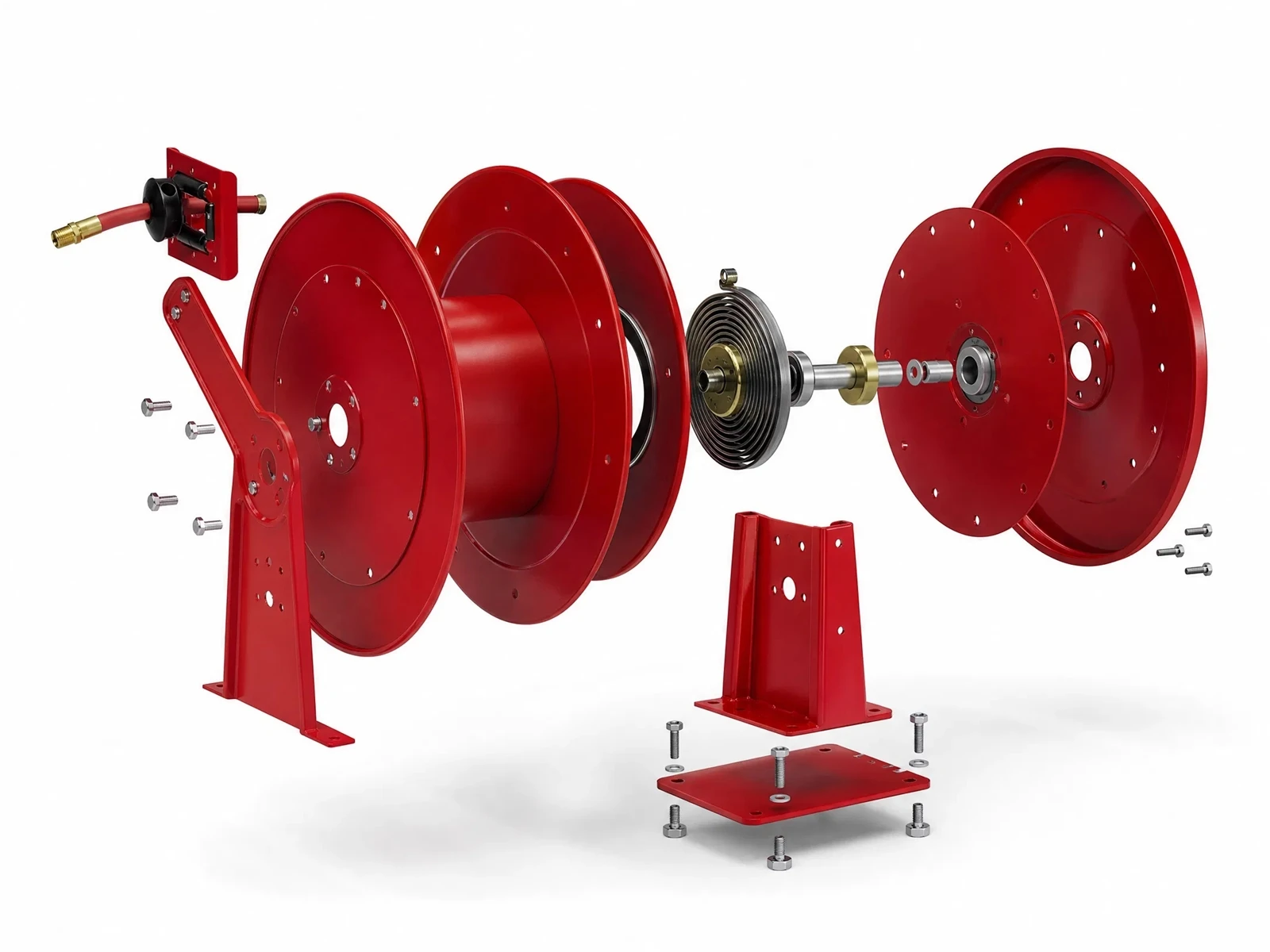
A fire hose reel cabinet is a fixed fire-protection enclosure designed to house, protect, and provide controlled access to a fire hose reel and its associated firefighting equipment. Unlike a standalone hose reel, the cabinet forms a protected installation point around the reel, hose, nozzle, valve, and-in some configurations-additional firefighting accessories.
Fire hose reel cabinets are commonly installed in commercial buildings, industrial facilities, warehouses, workshops, parking structures, public buildings, transport facilities, and other locations where first-response firefighting equipment must remain readily accessible.
The cabinet itself does not extinguish a fire. Its engineering role is to keep the firefighting equipment protected, identifiable, accessible, and correctly positioned for emergency use.
What Does a Fire Hose Reel Cabinet Contain?
A typical installation combines several components into one accessible fire-fighting point.
| Component | Function |
|---|---|
| Cabinet body | Protects the internal equipment from the surrounding environment |
| Hose reel | Stores and deploys the fire hose |
| Fire hose | Carries water from the supply connection to the fire |
| Nozzle | Controls and directs the discharged water |
| Isolation valve | Controls water supply to the reel |
| Reel bracket/frame | Supports the rotating reel assembly |
| Hose guide | Helps the hose unwind and rewind without excessive rubbing |
| Door | Provides access while keeping equipment enclosed |
| Door lock/latch | Prevents unwanted access while allowing emergency opening |
| Signage/window | Makes the equipment easier to identify |
| Drainage/ventilation provisions | Helps manage moisture depending on cabinet design |
Not every cabinet contains exactly the same components. The configuration depends on the fire-protection system, installation environment, local regulations, and project requirements.
How Is a Fire Hose Reel Cabinet Different from a Fire Hose Reel?
The two terms are often used interchangeably, but they describe different parts of the installation.
A fire hose reel is the mechanical device that stores and deploys the hose.
A fire hose reel cabinet is the enclosure and installation assembly used to protect and organize the reel and related equipment.
The distinction becomes important when designing a complete fire-protection installation.
| Item | Fire Hose Reel | Fire Hose Reel Cabinet |
|---|---|---|
| Primary function | Store and deploy hose | Protect and house firefighting equipment |
| Main structure | Drum, frame, spindle, swivel | Enclosure, door, mounting structure |
| Hose management | Directly controls hose storage | Provides protected space for the reel |
| Environmental protection | Limited by reel construction | Provides additional physical protection |
| Visibility | Reel itself may be exposed | Can provide visible signage/window |
| Installation | Wall, floor, vehicle, etc. | Usually fixed into or against a building structure |
| Equipment integration | Mainly hose-related | Can accommodate reel, valve, nozzle and accessories |
Therefore, a cabinet should not be evaluated simply as a metal box around a reel. Its dimensions, access arrangement, mounting structure, ventilation, corrosion resistance, and internal clearance can all influence the usability of the fire-protection installation.
Why Is a Cabinet Used for a Fire Hose Reel?
The main reason for enclosing a hose reel is equipment protection without compromising emergency access.
Firefighting equipment may remain installed for years before it is needed. During that time, it can be exposed to dust, impact, moisture, accidental contact, storage activities, vehicle movement, or other environmental conditions.
A cabinet provides a physical boundary around the equipment.
Equipment protection
The enclosure can reduce the risk of:
- accidental impact;
- contamination by dust;
- unauthorized handling;
- mechanical damage;
- exposure to corrosive environments;
- obstruction by surrounding materials.
Faster identification
A dedicated cabinet can create a visually recognizable fire-equipment location. Door markings, fire symbols, glazing, and contrasting finishes can make the installation easier to locate during an emergency.
Controlled hose access
The cabinet must allow the operator to pull the hose out without the hose becoming trapped against the enclosure.
This means cabinet design and reel geometry need to be considered together.
How Does a Fire Hose Reel Cabinet Work?
The cabinet itself has no complicated operating mechanism. The operating process is primarily controlled by the hose reel and water-supply system.
When the hose is pulled, the reel drum rotates around its spindle. The hose leaves the drum progressively instead of being manually removed from a pile.
Depending on the reel configuration, water may pass through a central swivel or internal water connection while the drum rotates.
The cabinet therefore needs sufficient internal clearance for:
- drum rotation;
- hose deployment;
- valve operation;
- nozzle removal;
- hose movement through the cabinet opening.
A cabinet that is technically large enough to contain the reel may still be poorly designed if these operating clearances are inadequate.
Fire Hose Reel Cabinet Dimensions
Cabinet dimensions should be determined from the actual reel assembly rather than selecting a cabinet based only on hose length.
Important dimensional parameters include:
For example, a reel carrying a longer hose may require a larger drum. Increasing drum diameter can affect the cabinet's required width or depth.
Basic dimensional relationship
Cabinet internal clearance > Reel envelope + operating clearance
The operating clearance is particularly important around the hose outlet and nozzle.
Cabinet Construction Materials
Fire hose reel cabinets are commonly manufactured from materials selected according to the installation environment.
Mild steel
Mild steel is frequently used where mechanical strength and economical fabrication are important.
Typical surface treatments include:
- powder coating;
- painted finishes;
- galvanized treatment.
Stainless steel
Stainless steel is useful where the cabinet must tolerate higher humidity, corrosive atmospheres, or demanding architectural environments.
Common grades may include:
- SUS 304 / 304 stainless steel;
- SUS 316 / 316 stainless steel.
The appropriate grade depends on the surrounding environment rather than simply choosing the highest specification available.
Galvanized steel
Galvanized sheet provides zinc-based corrosion protection and can be useful in environments where moisture exposure is a concern.
For outdoor installations, however, the complete cabinet construction-including fasteners, hinges, seals, joints, and coating-is more important than the sheet material alone.
Fire Hose Reel Cabinet Door Design
The cabinet door directly affects accessibility.
Common configurations include:
The critical design question is not simply "Does the door close?"
It is: "Can the operator open the cabinet and deploy the hose without the door interfering with the hose path?"
Internal Arrangement of a Fire Hose Reel Cabinet
Internal layout has a direct influence on emergency operation.
A well-designed cabinet should consider the relative positions of:
For example, if the valve is positioned behind the reel, the operator may have difficulty reaching it after opening the cabinet.
Similarly, if the hose outlet is too close to the cabinet edge, repeated deployment can create excessive bending or abrasion.
A useful engineering approach is to design the cabinet around the actual operating envelope, rather than simply around the static dimensions of the reel.
Hose Reel and Cabinet Compatibility
Not every fire hose reel can be installed in every cabinet.
Before selecting a cabinet, the following parameters should be matched.
| Parameter | Why It Matters |
|---|---|
| Reel diameter | Determines internal height/depth requirements |
| Reel width | Determines cabinet width |
| Hose length | Influences reel capacity |
| Hose OD | Influences reel capacity and outlet clearance |
| Hose bend radius | Determines deployment geometry |
| Water inlet | Must align with the supply connection |
| Valve location | Must remain accessible |
| Nozzle size | Determines holder and storage space |
| Reel mounting position | Must align with cabinet structure |
| Hose exit direction | Must support smooth deployment |
| Door opening | Must not obstruct hose withdrawal |
This is especially important for custom cabinets or cabinets supplied separately from the hose reel.
Fire Hose Reel Cabinet Installation Types
The installation method depends on building design and available space.
Recessed cabinet
The cabinet is installed into a wall cavity.
Advantages:
- reduced projection from the wall;
- cleaner architectural appearance;
- better use of corridor space.
However, wall thickness and structural conditions must accommodate the cabinet.
Surface-mounted cabinet
The cabinet is fixed directly onto the wall surface.
This approach can simplify installation where wall cavities are unavailable.
Outdoor cabinet
Outdoor cabinets require additional consideration for:
The cabinet should be designed according to the actual environmental exposure rather than simply using an indoor cabinet outdoors.
Fire Hose Reel Cabinets for Different Environments
The same cabinet configuration is not suitable for every application.
| Environment | Key Design Considerations |
|---|---|
| Office building | Appearance, accessibility, compact installation |
| Warehouse | Impact resistance, visibility, forklift traffic |
| Factory | Dust, oil, mechanical damage, corrosion |
| Parking garage | Vehicle impact, moisture, visibility |
| Coastal facility | Salt corrosion, stainless/treated materials |
| Outdoor site | Rain, UV, drainage, corrosion |
| Mining facility | Dust, vibration, harsh environment |
| Food-processing facility | Hygiene, corrosion resistance, cleanable surfaces |
| Commercial complex | Architectural integration and access |
The cabinet should therefore be specified as part of the building's fire-protection infrastructure.
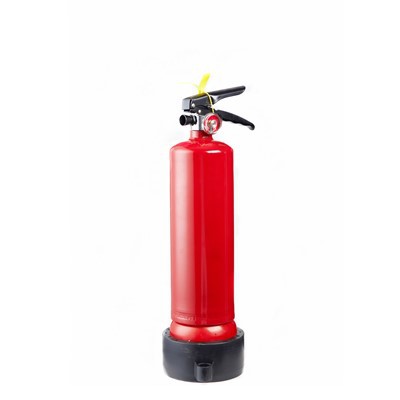
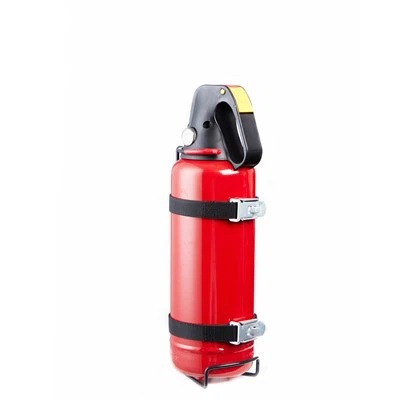
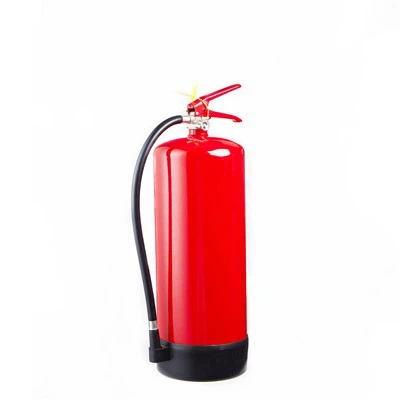
Fire Hose Reel Cabinet vs Fire Extinguisher Cabinet
These two cabinets serve different types of firefighting equipment.
| Feature | Hose Reel Cabinet | Fire Extinguisher Cabinet |
|---|---|---|
| Main equipment | Hose reel system | Portable extinguisher |
| Hose deployment | Required | Not applicable |
| Rotating drum | Usually present | Not present |
| Water connection | Usually required | Not required |
| Internal operating clearance | More demanding | Relatively simple |
| Cabinet depth | Often greater | Usually smaller |
| Fixed water system | Yes | No |
| Operator action | Deploy hose and operate water system | Remove extinguisher and discharge |
A hose reel cabinet must accommodate a mechanical hose-deployment system and water connection, so its engineering requirements are different from those of a simple extinguisher enclosure.
Key Technical Parameters When Selecting a Fire Hose Reel Cabinet
For project procurement, a cabinet specification should contain more than external dimensions.
Important parameters include:
Cabinet parameters
- overall dimensions;
- internal dimensions;
- sheet thickness;
- material;
- surface treatment;
- door configuration;
- hinge arrangement;
- latch type;
- glazing type;
- mounting method;
- cabinet weight.
Hose reel parameters
- hose length;
- hose ID;
- hose OD;
- reel diameter;
- reel width;
- inlet/outlet size;
- working pressure;
- operating temperature;
- nozzle type.
Installation parameters
- wall type;
- recessed or surface mounting;
- supply-pipe location;
- hose exit direction;
- operating clearance;
- cabinet accessibility;
- environmental exposure.
Fire Hose Reel Cabinet Maintenance
A cabinet may remain visually intact while the equipment inside becomes difficult to operate.
Routine inspection should therefore examine the complete assembly.
Cabinet (Check)
- door opening;
- hinges;
- latch;
- corrosion;
- glazing;
- signage;
- deformation;
- water ingress.
Hose reel (Check)
- free drum rotation;
- hose condition;
- swivel condition;
- hose guide;
- spring mechanism where applicable;
- mounting bolts.
Water system (Check)
- valve accessibility;
- leakage;
- hose connections;
- nozzle condition;
- supply pressure according to the applicable system requirements.
The cabinet should never become a storage space for unrelated materials. Blocking the cabinet with tools, cartons, cleaning supplies, or other objects defeats its primary purpose.
Common Fire Hose Reel Cabinet Design Problems
Several problems appear repeatedly in poorly planned installations.
The reel technically fits, but the hose cannot be pulled out smoothly.
A sharp edge or restricted outlet can increase hose abrasion.
The operator must reach behind or around the reel to access the water control.
The hose catches on the door or cabinet frame during withdrawal.
An indoor cabinet is installed in a humid or corrosive environment.
The equipment becomes difficult to reach or interferes with surrounding building elements.
Appearance alone does not guarantee usable emergency equipment.
What Should Be Considered Before Ordering a Fire Hose Reel Cabinet?
A project engineer or purchaser should confirm the following information before placing an order:
1. What type of hose reel will be installed?
Determine the reel dimensions, hose length, inlet and mounting configuration.
2. Where will the cabinet be installed?
Indoor, outdoor, industrial, coastal, parking, warehouse, or another environment.
3. Is the installation recessed or surface-mounted?
This determines cabinet structure and external dimensions.
4. How will the hose leave the cabinet?
The withdrawal direction must be compatible with the building layout.
5. What water connection is required?
Confirm pipe size, inlet position, valve arrangement, and connection orientation.
6. What level of physical protection is required?
A warehouse or parking area may require a more robust enclosure than an office corridor.
7. What local fire-protection requirements apply?
Cabinet configuration, hose reel performance, installation position, signage, and access requirements should be checked against the applicable local code or project specification.
Fire Hose Reel Cabinet as Part of a Complete Fire-Protection System
A cabinet should not be evaluated as an isolated sheet-metal product.
A typical fixed hose reel installation can be understood as:
The cabinet surrounds and supports this equipment while providing a defined access point.
This means cabinet selection should be coordinated with:
A mismatch between these components can create operational problems even when every individual component meets its own specification.
Fire Hose Reel Cabinet Selection Checklist
Before approving a cabinet for a project, verify:
| Checkpoint | Requirement |
|---|---|
| Reel compatibility | Cabinet matches the selected reel |
| Internal space | Sufficient clearance for operation |
| Hose capacity | Matches required hose length and OD |
| Water connection | Correct inlet location and size |
| Hose outlet | Smooth deployment path |
| Door | Opens without restricting hose movement |
| Material | Suitable for installation environment |
| Corrosion protection | Appropriate to exposure |
| Mounting | Compatible with wall/building structure |
| Accessibility | Equipment can be reached quickly |
| Signage | Fire equipment is readily identifiable |
| Maintenance | Reel and valve can be inspected without unnecessary obstruction |
| Compliance | Meets applicable project/local requirements |
Conclusion
A fire hose reel cabinet is more than an enclosure for a hose reel. It is the physical interface between a fixed firefighting installation and the person who must operate that equipment during an emergency.
Its design needs to accommodate the reel's mechanical movement, hose deployment path, water connection, valve access, nozzle storage, environmental exposure, and building installation conditions.
For this reason, the correct selection process should start with the hose reel and fire-protection requirements, then work outward to cabinet dimensions, materials, mounting configuration, access design, and environmental protection.